

Analysing global video game sales

Context and objective
Context
The current understanding of how video game sales have performed across geographic regions is that sales have remained relatively consistent both in terms of overall global sales and regional market share of global sales, with the North American (NA) market leading. The marketing budget for computer games has been invested based on this understanding and it is expected that where marketing budget is invested sales should grow or at least remain consistent.
The same understanding has also been applied to performance of game genres, that sales in the likes of platform and shooter games have remained consistent over time with little variation between the different geographical regions.
Client
A global video gaming company was reviewing its marketing strategy and budget spend in order to maximise return and capitalise on emerging opportunities.
Objective
To challenge existing understanding and provide actionable insights to update the marketing strategy.
Data and tools
The dataset used for this analysis was an open source dataset from a gaming website and contained information on annual video game sales by region, genre and platform.
Dataset
Tools
Excel and PowerPoint
Procedures
→ Grouping data
→ Summarizing data
→ Descriptive analysis
→ Visualizing results in Excel
→ Presenting results
Key data insights
Regional variation over time
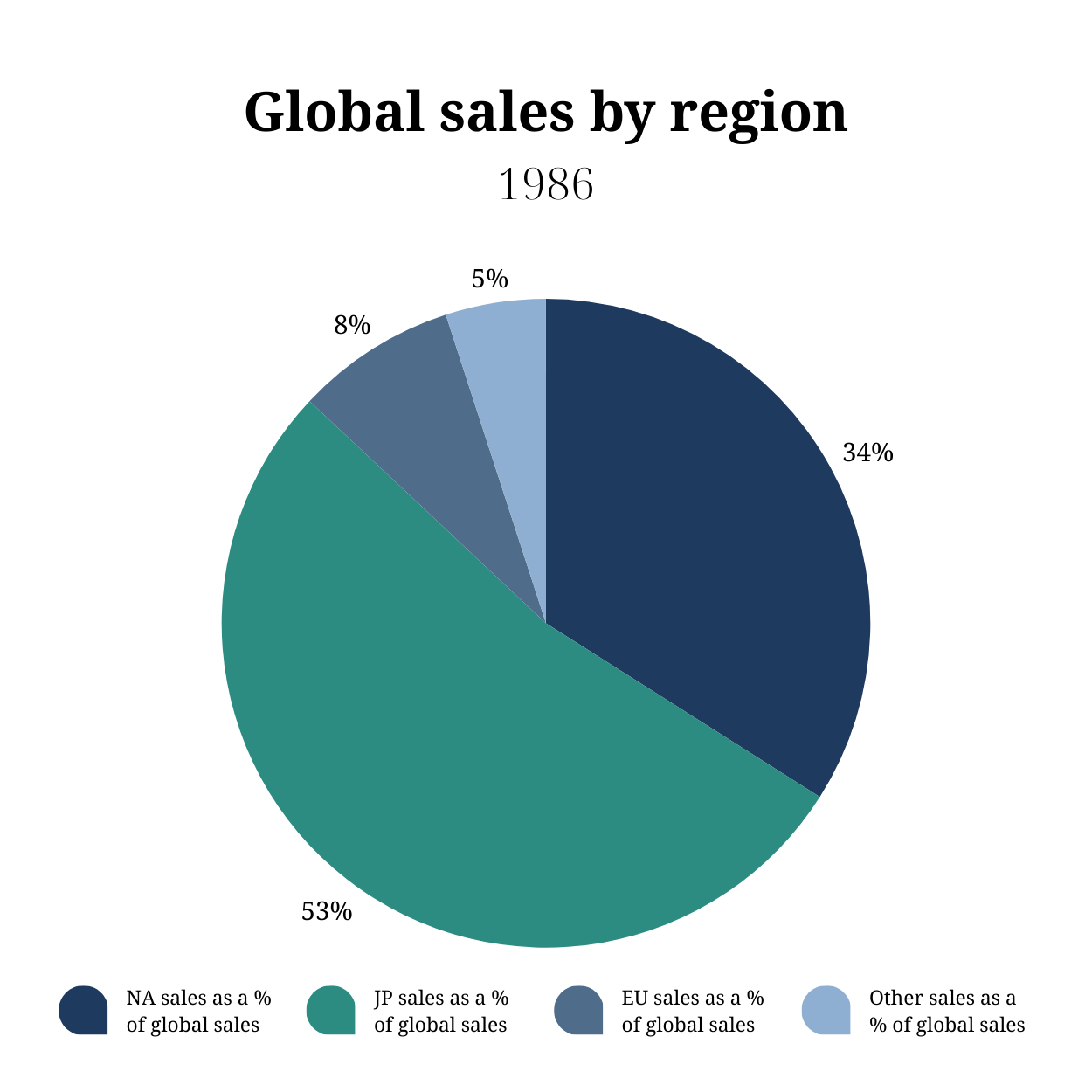
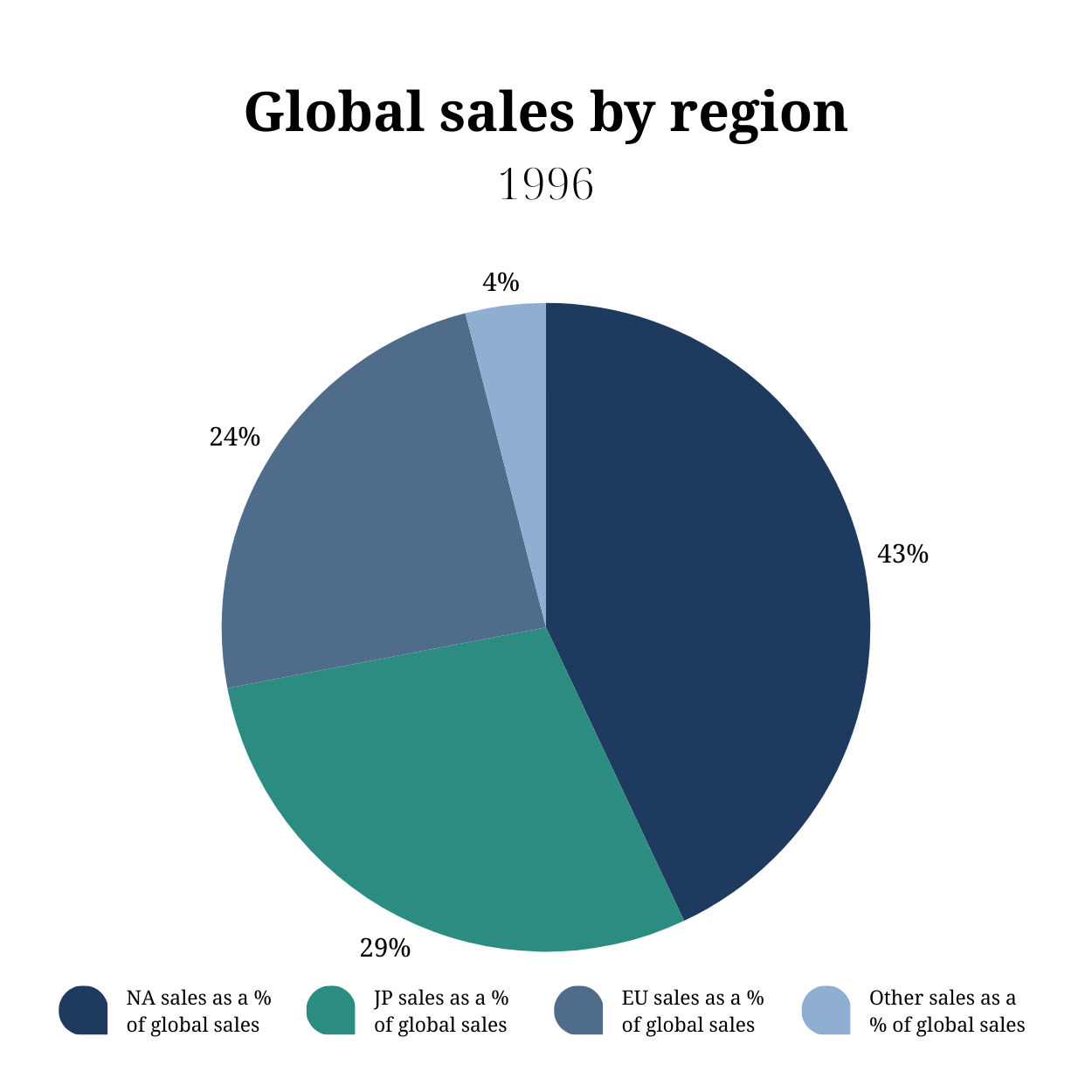
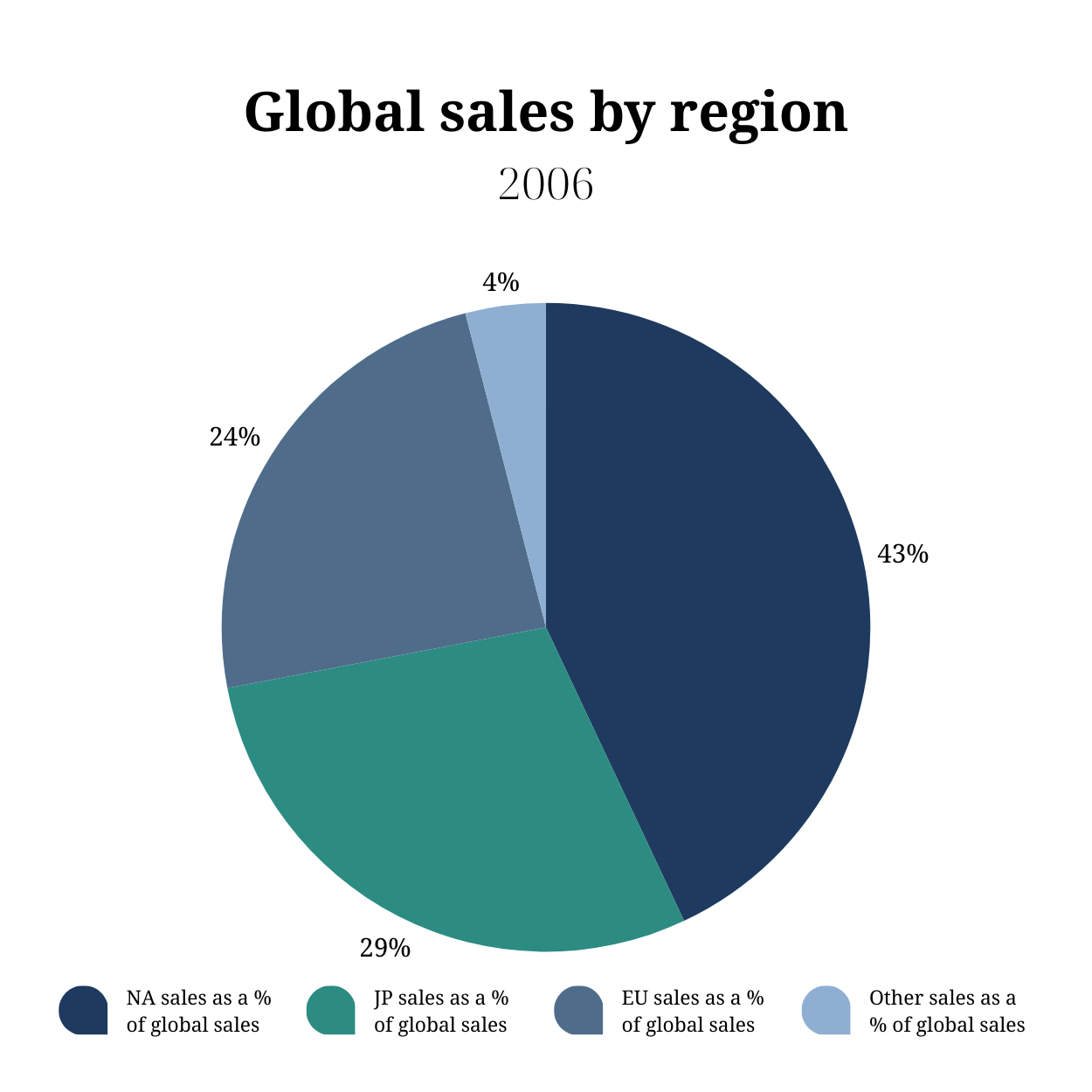
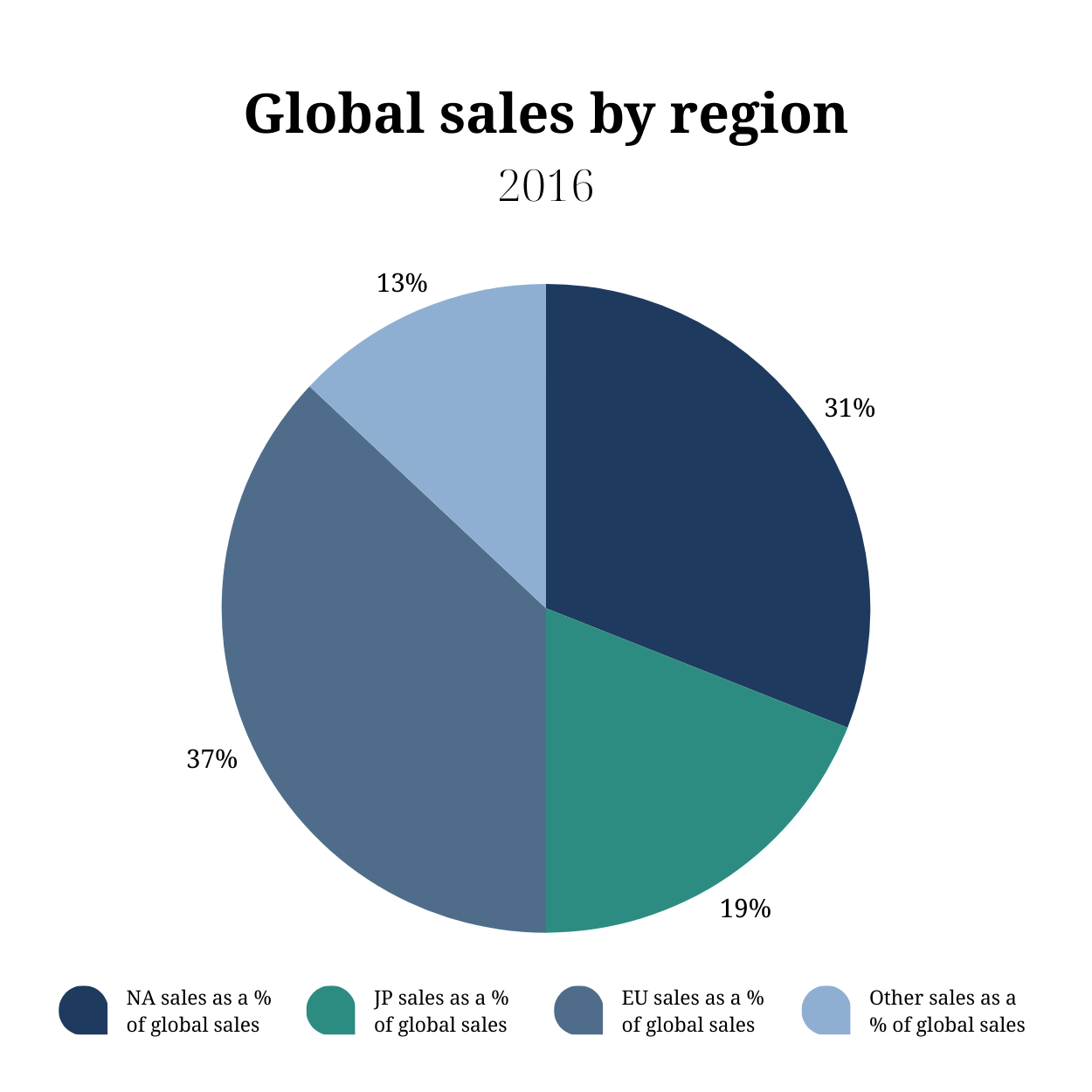
Taking a snapshot of the share of global sales by region over the last four decades, paints a clearer picture the variance in performance of the three key regional markets over time. Three important insights are:
- Whilst NA sales as a % of Global sales have fluctuated over time, the trend of the last 10 years is that they have been decreasing.
- Sales in JP performed well in the mid 80s but since have generally decreased as a % of Global Sales.
- Sales in the EU (and ‘Other’ regions) have improved consistently as a % of global sales from only 8% (and 5%) in 1986 to 37% (and 13%) by 2016. This increase in EU share of global sales means that the EU market is the largest in terms of global sales.
Popular genres by region in 2016
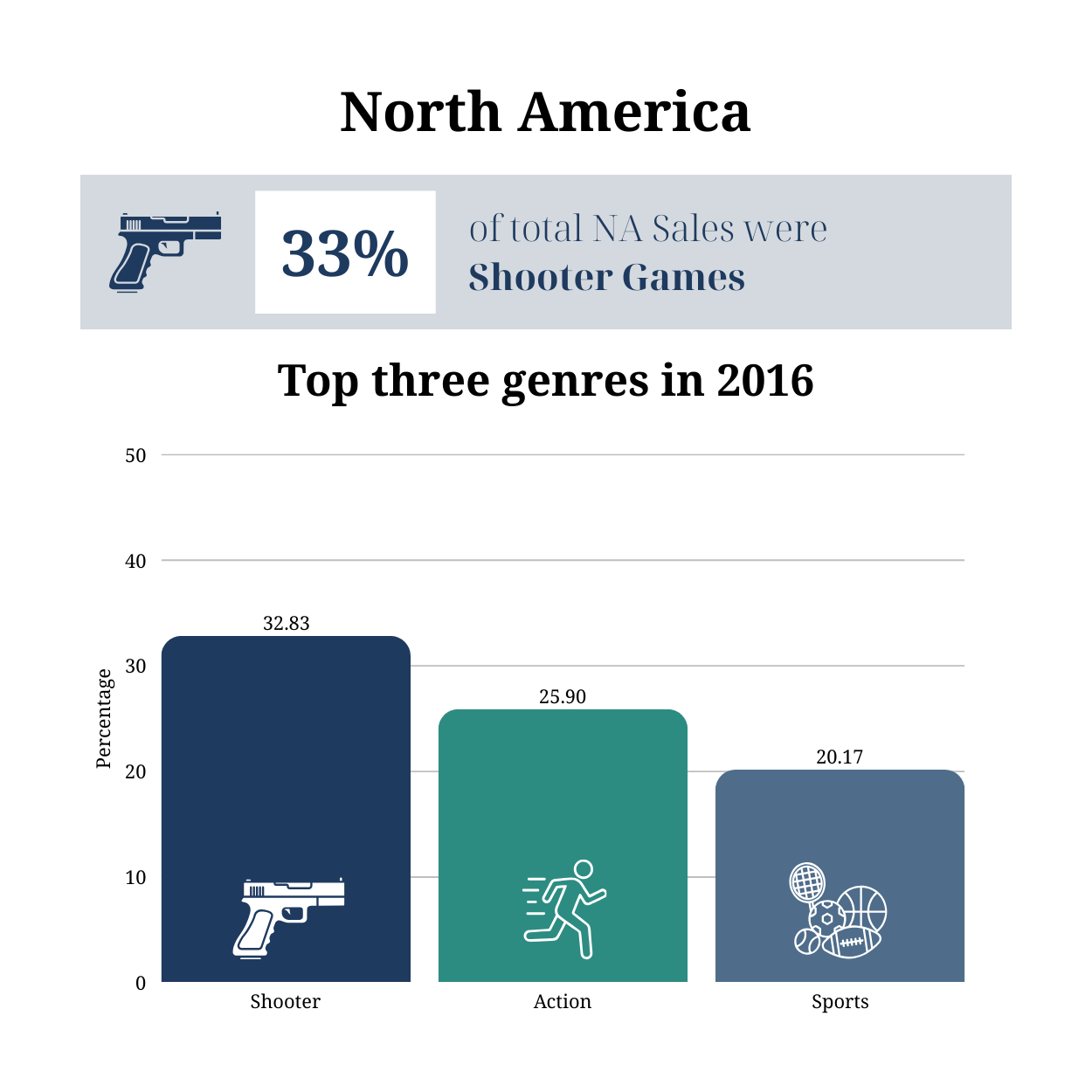
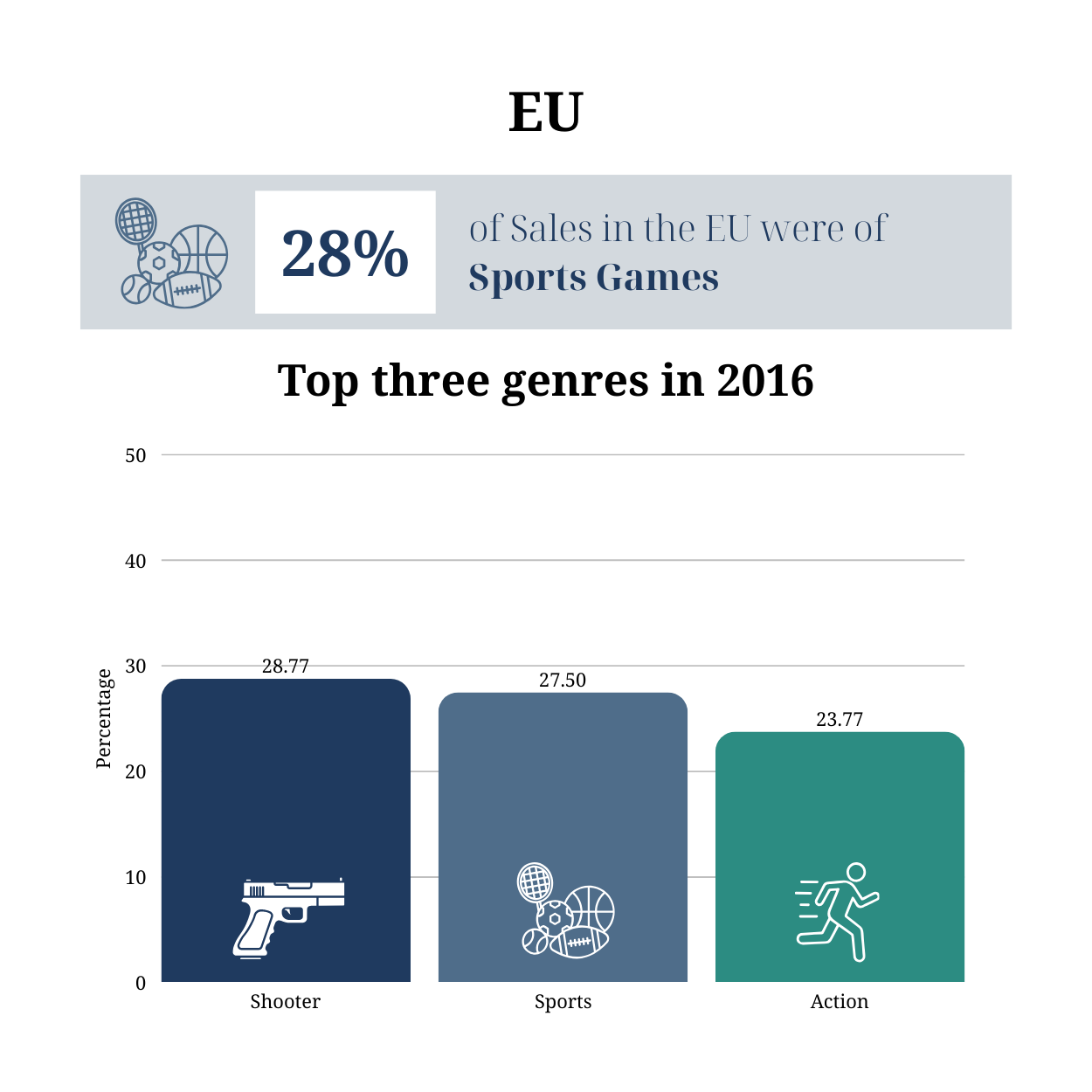
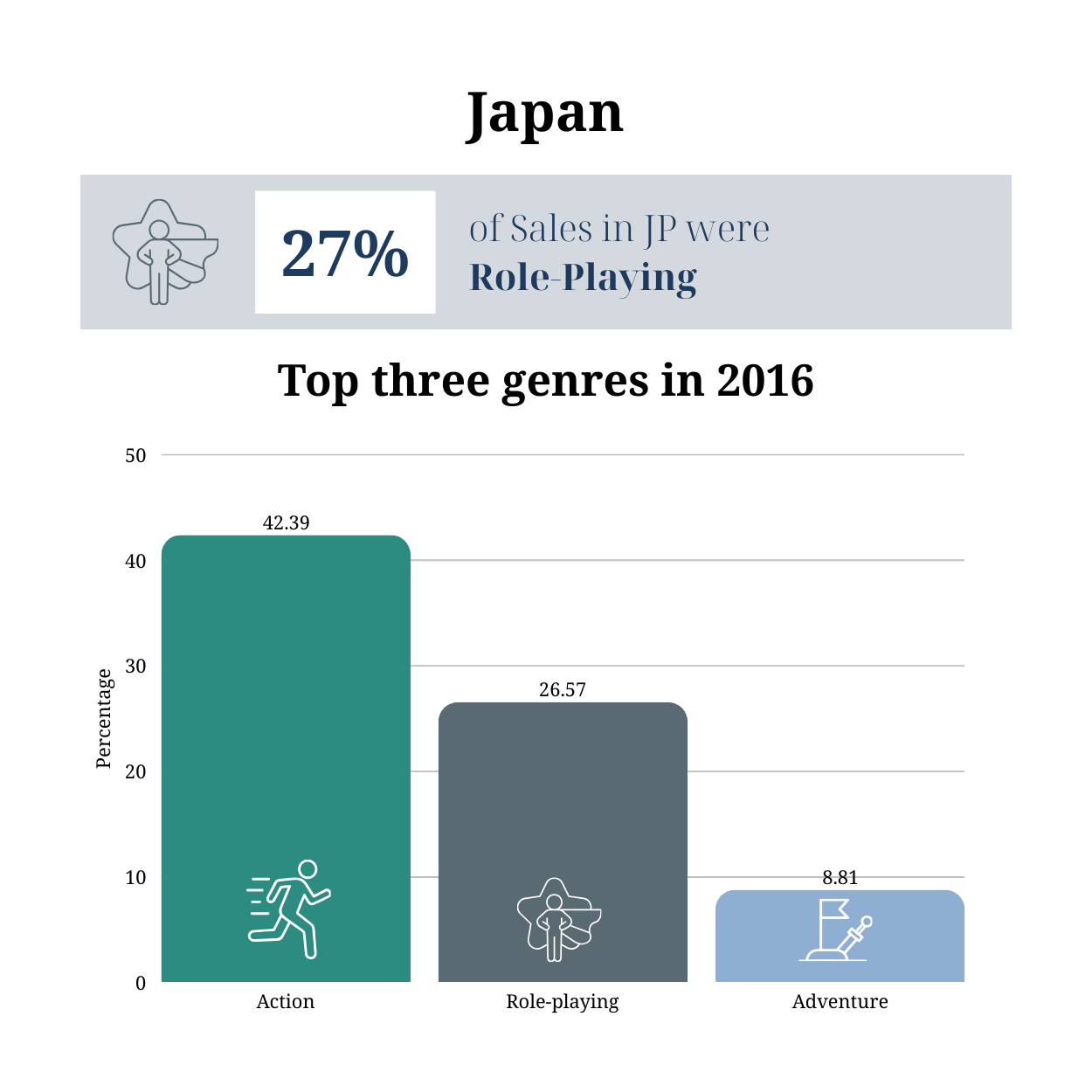
Summary and recommendations
Breakdown of Global Sales in 2016, by Region, showing the top three genres in each region by total sales.
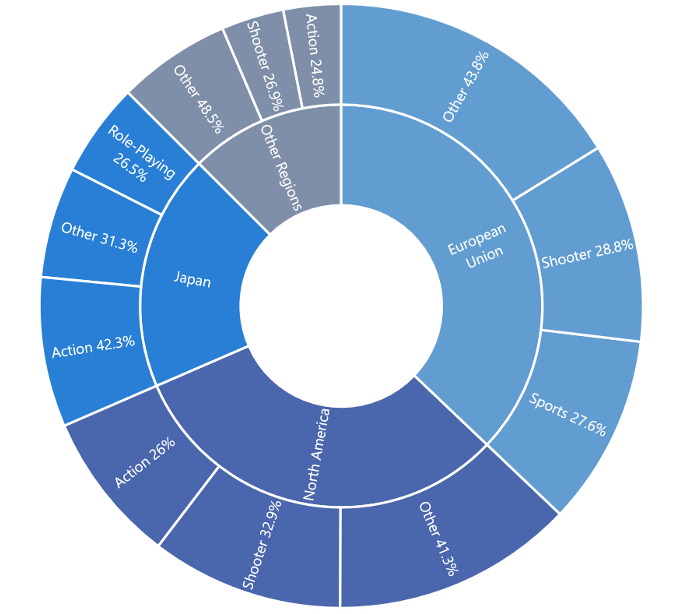
The performance of video game sales across different regions and different game genres has changed over time and so it is essential to consider the current data.
When allocating the marketing budget per region, investing in the EU market (which saw the greatest share of global sales in 2016) would likely see the greatest return on investment.
In terms of in which genres should be invested, these should be considered at a regional level, in particular for the Japan market where Action and Role-playing games account for largest shares of the regional sales where as Shooter games make up the largest proportion of sales in the other regions.